
As a social organization, IWCA Vietnam works toward a straightforward goal: improving quality of life for women in the coffee sector. That work focuses particularly on ethnic minority women who contribute to Vietnamese coffee's sustainable value but rarely receive recognition for it.
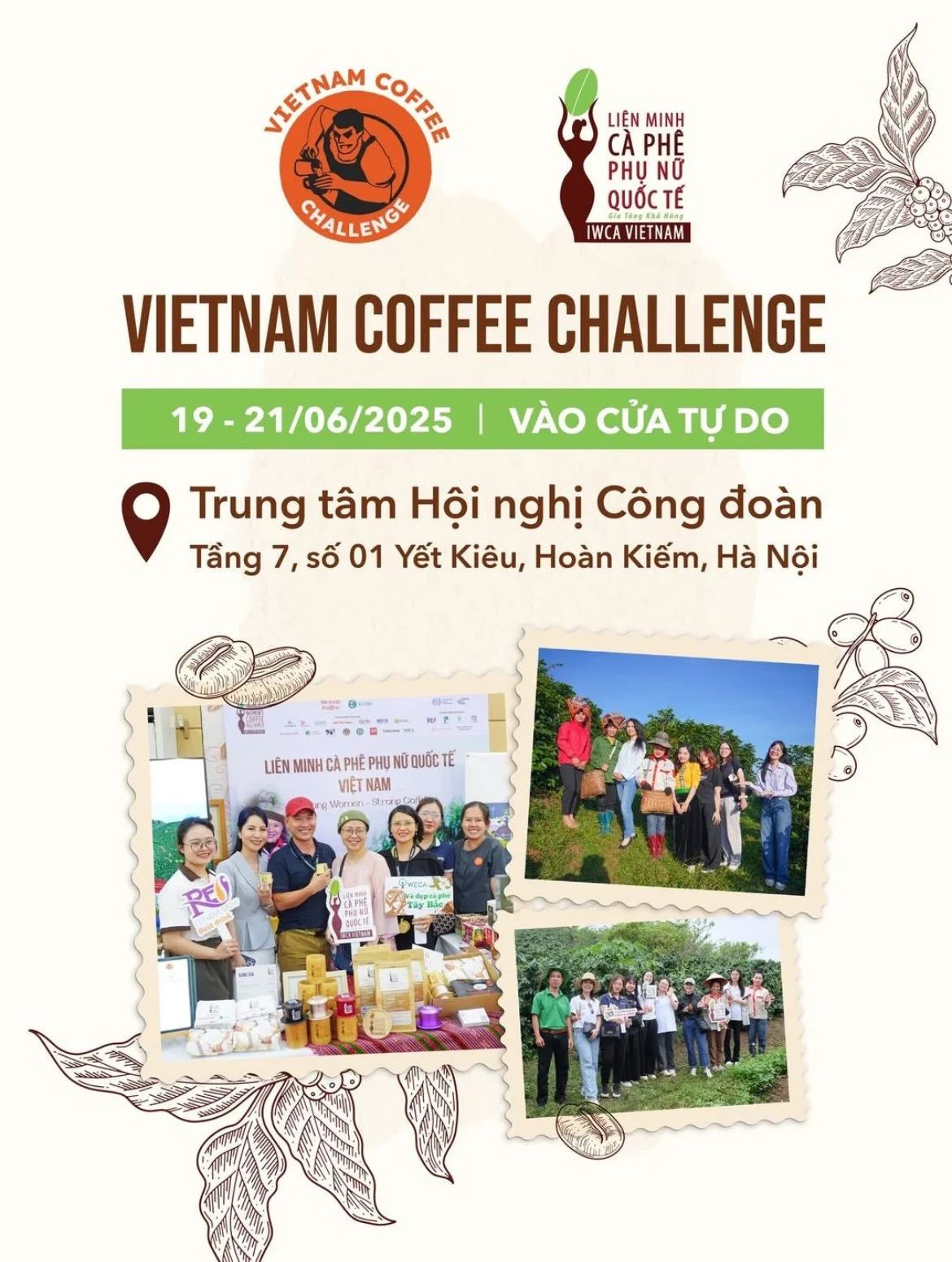
At Vietnam Coffee Challenge 2025, IWCA Vietnam brought that work into public view. The organization partnered with member businesses—ACOM Vietnam, Hạt A Café, Lacàph, Detech Coffee, Reo Coffee, and Wecacha Coffee & Tea—to deliver a unified message: "Nâng tầm giá trị cà phê Việt"—Elevating the Value of Vietnamese Coffee.
The message matters because Vietnamese coffee still fights for respect in international markets. Despite being the world's second-largest producer, Vietnam's coffee is often dismissed as bulk commodity, suitable for instant coffee and not much else. That narrative ignores reality. The women IWCA Vietnam represents are growing specialty-grade coffee, implementing sustainable practices, and building businesses that honor quality and origin.
IWCA Vietnam's network includes 850 women coffee farmers. That's not a small pilot program. That's meaningful scale—enough farmers to impact regional coffee quality, to influence sustainable practice adoption, to demonstrate what's possible when women receive support for improving their work.
The partnership structure at VCC 2025 demonstrated something else: women in coffee aren't isolated actors. They're connected across the value chain. Farmers work with processors like ACOM Vietnam. Processors work with roasters like Detech Coffee. Roasters work with retailers like Wecacha. Retailers work with innovative brands like Hạt A Café and Lacàph. Everyone works with Reo Coffee's forest-garden approach. These aren't separate businesses. They're a network.
That network creates what IWCA Global calls "bridge-building infrastructure." No single organization can solve all the challenges women coffee farmers face. But connected organizations—farmers, businesses, social enterprises—can address different pieces of the same problems. Access to processing equipment. Access to markets. Access to training. Access to capital. Access to recognition. Different partners handle different access points.
Vietnam Coffee Challenge provided space for these partners to be visible together, to tell their stories together, to demonstrate that positive change in Vietnamese coffee is already happening. It's not theoretical. It's operational. These are working businesses, active farms, real people creating measurable impact.
The ethnic minority women farmers IWCA Vietnam works with are changing their own circumstances. They're improving their livelihoods through better coffee practices. They're increasing their income through quality improvements. They're building stability through sustainable farming. The businesses at VCC 2025 are part of that story—they're the market access, the processing support, the brand development that makes improved quality worth pursuing.
VCC 2025 ran through June 19th, giving visitors three days to encounter these stories, taste these coffees, meet these women. For IWCA Vietnam, the event wasn't about generating sales—though that matters—it was about changing how people think about who grows Vietnamese coffee and what that coffee is capable of being.
The 850 women farmers in IWCA Vietnam's network deserve recognition for their work. Events like VCC 2025 help ensure they receive it.