
Learning Ecological Coffee Practices That Actually Work on Farms
IWCA Vietnam's webinar on ecological coffee cultivation, emission reduction, and the role of women farmers drew coffee enthusiasts and farmers committed to sustainable practices. The format balanced expert knowledge with practical application—the combination that makes training actually useful.
MSc. Duong Van Hoai from TMT Consulting presented on ecological agriculture models and emission reduction solutions specific to coffee production. This wasn't generic sustainability content. It was information tailored to the actual conditions Vietnamese coffee farmers work within—the soil types, the climate patterns, the economic realities, the available resources.
The webinar also featured stories from farming households, demonstrating women's roles in sustainable coffee value chains. Those stories matter because they translate technical recommendations into recognizable scenarios. When a farmer hears another farmer explain how they implemented ground cover management or canopy creation, it becomes more than a technique. It becomes something they can picture doing themselves.
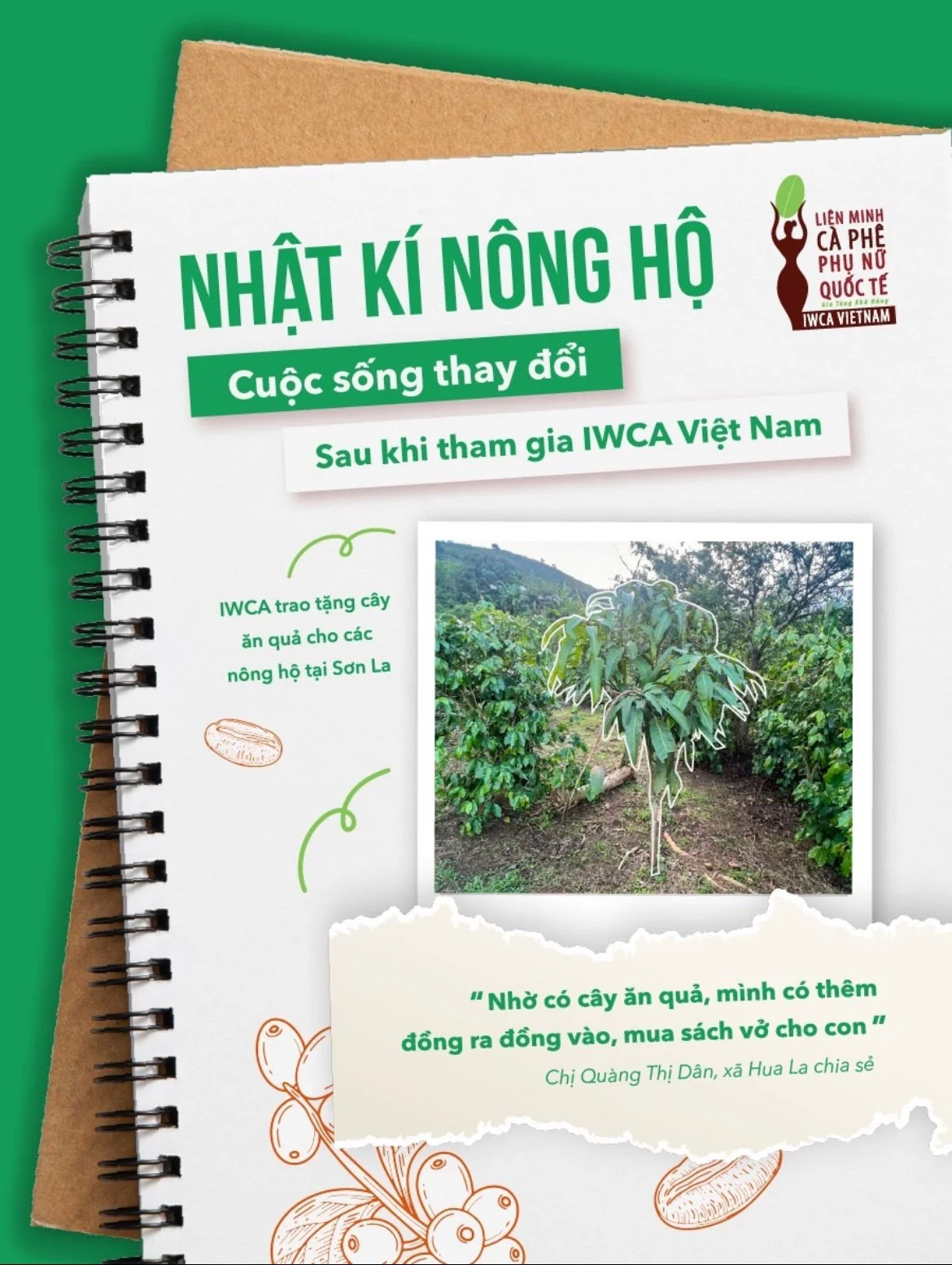
Ms. Quang Thi Dan, a farmer in IWCA Vietnam's network, shared her experience: "After the talkshow, I've learned better coffee farming techniques, such as maintaining ground cover, pruning, and canopy management."
That's the feedback that indicates a webinar succeeded. Not "that was interesting" but "here's what I learned that I can use." Ground cover maintenance, pruning, canopy management—these are specific practices Ms. Dan can implement. They're not aspirational. They're operational.
Ecological coffee cultivation matters for multiple reasons. It reduces chemical inputs, which saves farmers money and reduces environmental impact. It improves soil health, which increases long-term productivity. It creates more resilient farms that can better withstand climate variability. And it produces coffee that can access markets requiring sustainability certifications or practices.
But ecological practices only matter if farmers actually implement them. That implementation depends on farmers understanding why the practices work, how to do them correctly, and what results to expect. Webinars like this one provide that understanding.
The emission reduction focus reflects increasing market requirements. European regulations around deforestation and emissions are affecting coffee trade. Farmers who can demonstrate sustainable practices and lower emissions will have better market access. Farmers who can't may find themselves excluded from premium markets.
IWCA Vietnam's approach—bringing in experts like MSc. Duong Van Hoai while centering farmers' experiences—creates learning environments where information flows both directions. The expert provides technical knowledge. The farmers provide implementation knowledge. Both kinds of knowledge are essential for changing practices at scale.
The response from participants indicated the webinar format worked. Farmers left with specific techniques they could implement. They left understanding why those techniques matter for market access and farm resilience. They left connected to other farmers working on similar challenges.
For IWCA Vietnam's network of 881 members, access to this kind of training supports the organization's broader work around sustainable development and quality improvement. Ecological practices often align with quality improvements—healthier plants produce better cherries, better soil creates better flavor profiles, sustainable farms maintain consistent production.
The webinar contributes to what IWCA Vietnam describes as moving the coffee community toward more sustainable agriculture. That movement happens through specific farmers learning specific techniques and implementing them on specific farms. It's not abstract. It's Ms. Quang Thi Dan improving her ground cover management. It's other farmers adjusting their pruning practices. It's accumulated small changes across hundreds of farms.
Webinars don't transform farming systems by themselves. But they're part of the infrastructure that makes transformation possible—creating access to knowledge, building confidence in new practices, connecting farmers to experts and to each other.
This one moved sustainable coffee farming from concept to practice, one farmer at a time.