
When Three Chapters Meet at HOST Milano to Showcase Women's Coffee
At HOST Milano 2025, three IWCA chapters from different continents came together for collaboration that demonstrated what international women's networks in coffee can create. IWCA Greece joined forces with IWCA Honduras and IWCA Colombia at the ARTEMIS booth, showcasing coffees from women producers while building connections across cultures and professional roles.
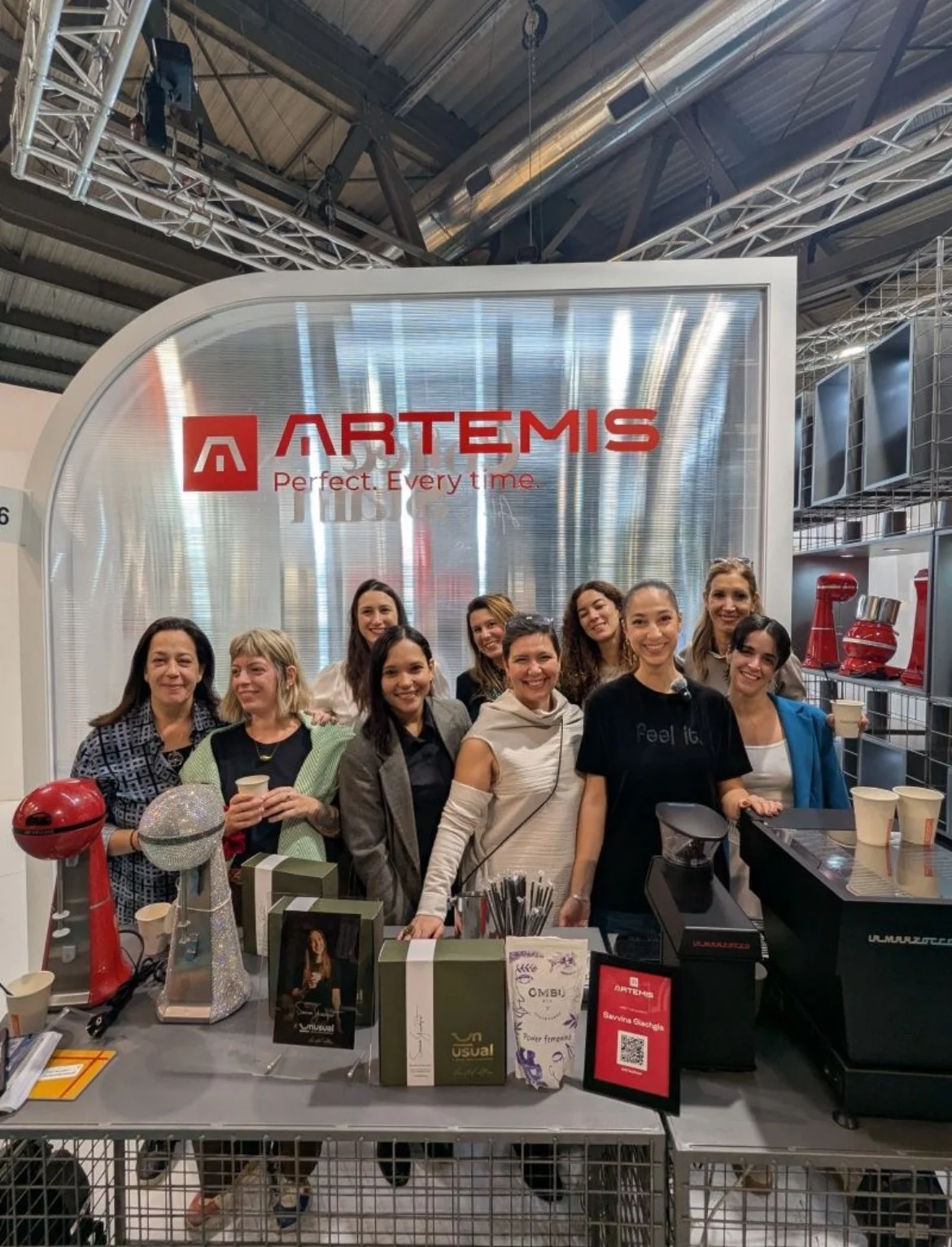
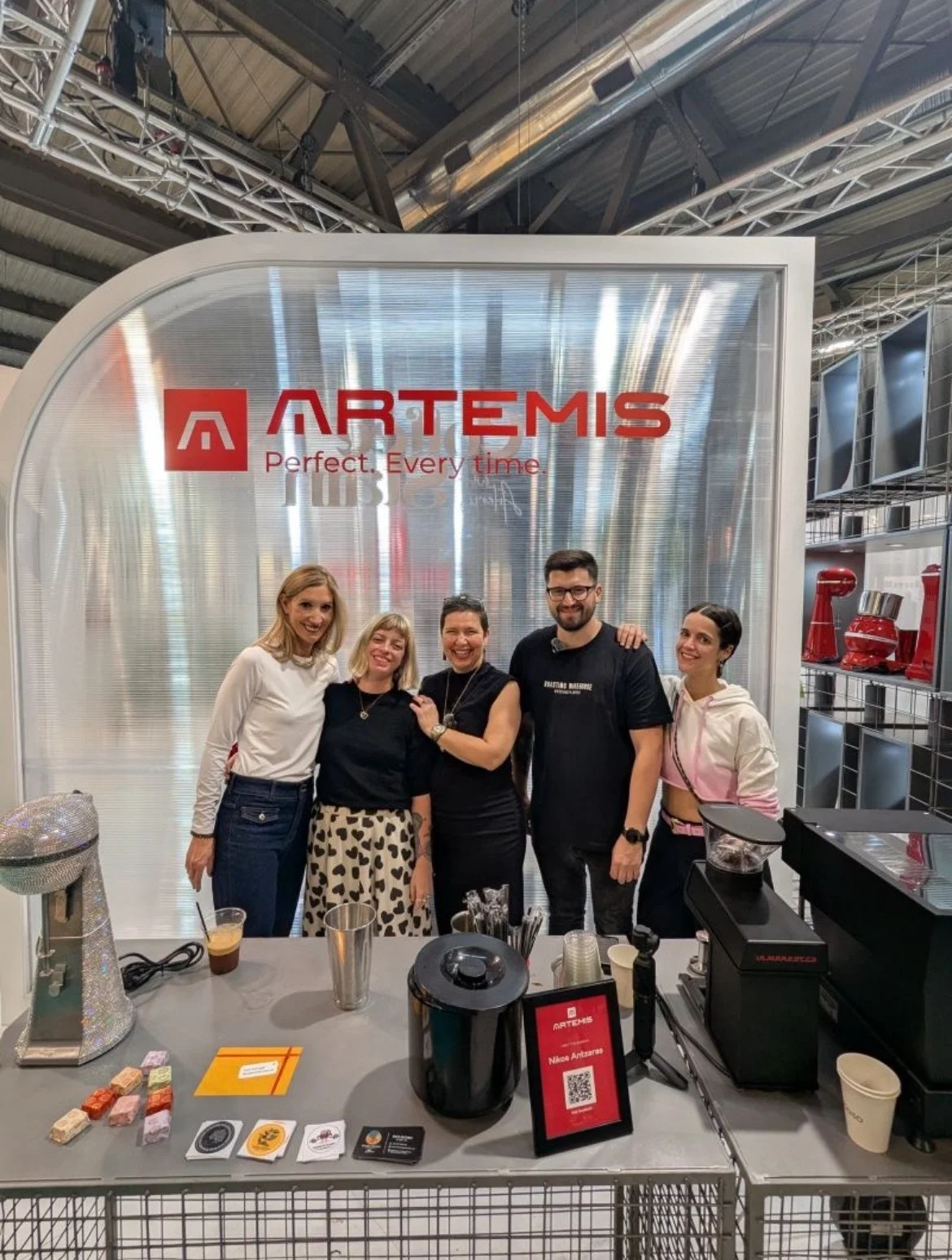
The format combined demonstration with conversation. Savina Giachgia, an IWCA Greece member, and Nikos Antzaras, co-owner of Roasting Warehouse Greece, ran guest barista shifts featuring cold coffee drinks made with coffees from Colombian and Honduran IWCA chapters. The drinks weren't the point—though they mattered. The point was creating space where consumers could taste coffee while learning about the women who grew it.
Francia Kilgore from IWCA Honduras participated directly, sharing insights about her work as a producer and the impact of women-led initiatives in coffee production. That direct connection—between producer and consumer, with coffee professionals facilitating—represents what trade shows can achieve when they're designed intentionally. Ms. Kilgore wasn't represented by someone else telling her story. She was present, speaking for herself, making her work visible.
HOST Milano draws the European hospitality industry—restaurant owners, café operators, equipment buyers, food service professionals. These are people who make purchasing decisions affecting which coffees enter their businesses, whose farms they source from, which origin stories they tell their customers. Creating opportunities for them to meet producers directly and taste the coffee those producers grow changes how they think about sourcing.
The collaboration between three chapters from different regions demonstrated network effects. IWCA Greece has 37 members, primarily coffee professionals in a consuming country context. IWCA Honduras and IWCA Colombia represent producers in origin countries. Alone, each chapter serves its members. Together, they create value none could generate independently.
IWCA Greece provided European market access and professional coffee preparation expertise. IWCA Honduras and Colombia provided direct producer participation and origin-specific coffees. ARTEMIS provided booth space and equipment. Roasting Warehouse Greece provided roasting and preparation knowledge. The collaboration wove these contributions into unified experience.
The choice to feature cold coffee drinks reflected current European market trends. Cold coffee consumption has grown significantly, particularly in café and restaurant contexts. Showcasing coffees from women producers through preparations European consumers already enjoy made the coffees accessible rather than exotic, familiar rather than foreign.
IWCA Spain's participation alongside Greece, Honduras, and Colombia added another layer. Four chapters collaborating at a single booth demonstrated organizational capacity for cross-chapter coordination. That capacity matters because isolated chapters have limited influence. Connected chapters working toward shared goals can shift industry conversations.
The support from ARTEMIS and the Gavriilidis family—who provided both booth space and active participation—illustrated partnership between women's organizations and coffee businesses. These partnerships create platform for chapters to reach audiences they couldn't access alone. They also demonstrate to coffee businesses that supporting women in coffee generates positive brand association and customer engagement.
For booth visitors at HOST Milano, the experience offered something trade shows don't always provide: direct connection to coffee's human dimensions. They tasted cold drinks prepared by skilled baristas using coffee grown by women producers they could meet and talk with. That connection creates memory, builds relationship, and influences future purchasing decisions.
The weekend generated what IWCA Greece described as "inspiring" results. Visitors engaged with the coffee, asked questions about production, connected Francia Kilgore's work to the drinks they were tasting. The booth traffic demonstrated that European coffee professionals want these connections—they want to know whose farms their coffee comes from, they want to meet producers, they want to support women in coffee.
For IWCA Greece, the HOST Milano collaboration represented their role as bridge between origin and market. Consuming country chapters can facilitate these connections because they operate in markets where producers need visibility and access. They can create platforms where producers' voices are heard directly rather than filtered through intermediaries.
The collaboration also modeled what's possible when chapters invest in cross-regional relationships. Planning this kind of coordination requires communication, logistics, shared resources, and commitment from multiple organizations. That it happened successfully at HOST Milano suggests IWCA's chapter network is developing the operational capacity to execute complex collaborative projects.
The booth at HOST Milano wasn't just marketing. It was demonstration of what coffee can be when women across the value chain—producers, roasters, baristas, organizations—work together intentionally to create value, build relationships, and tell stories that honor everyone's contributions.
That demonstration, delivered through cold coffee drinks at a European trade show, represents women in coffee building the infrastructure that makes their work visible and valued.